A Napiphany
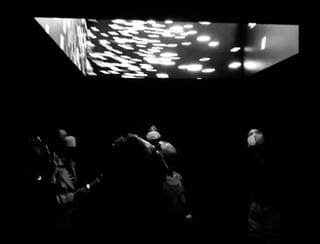
Two years ago, I discovered something startling: I could remember more from a movie I’d dozed off in than the entire week preceding it.
The film was Apichatpong Weerasethakul’s Memoria, a work of slow cinema that follows a woman (Tilda Swinton) as she searches for the source of a mysterious sound. It’s a quiet film, etched with a soft precarity and populated with mysterious figures and aliens.
I felt no guilt about drifting off. In fact, it was fitting as one of the characters was doing the same thing, lying motionless in the grass—possibly dead—for an entire six minutes. At some point, I followed him, probably drooled a little on my shirt, and then we both woke up and went about our days.
But the memory part gets me, how that plodding film somehow felt richer than my own experience, not in the sense of spectacle—we're drowning in that—but like I was shoring up some neglected part of my brain once crucial to how I shaped my perceptions, applying a splint to a fragmented continuity.
I feel this way too after seeing non-English language films in Japan, intent on the visuals while muddling through the 70% I can glean from the subtitles. Somewhere amid the effort of piecing things together, I'm more present than I am in a lot of my life. It makes me think of how we find ourselves catching up on movies during long flights, with the cramped space and tiny screens now talked about like the lost afternoons once spent in the plush seats of an auditorium. It's an unsettling reminder of how we live now, for it's not so much that our focus is captured, but, as Jonathan Crary argues, that it's being reshaped, conditioned into “repetitive operations and responses that overlap with acts of looking or listening.”
I've sometimes joked with friends that movie theaters feel less like entertainment venues than fitness clubs for the attention span, but that framing feels a little too joyless. I like the experience, but more often than not, the sense that I've had one at all.