From Where We Sit
I bought a new chair for my writing desk. I’d been relying on a 1921 Chesterfield, comfortable but more suited to a fireplace and a smoking jacket. It swallowed me up and made getting up for the bathroom an ordeal, demanding a series of noisy, awkward scoots just to turn on the printer or grab a reference book from a nearby shelf.
This new chair is sturdy and mobile, with a look that evokes Logan’s Run— if Logan worked at a Staples— and its color is the same burnt tangerine of the Glasgow Subway, one of the finest retro-future experiences for your money. Now when I sit at my desk, I don’t feel like I’m merely writing, but maybe helming the Enterprise or interfacing with the City Computer while it hoovers years from my life and insists that there is no sanctuary.
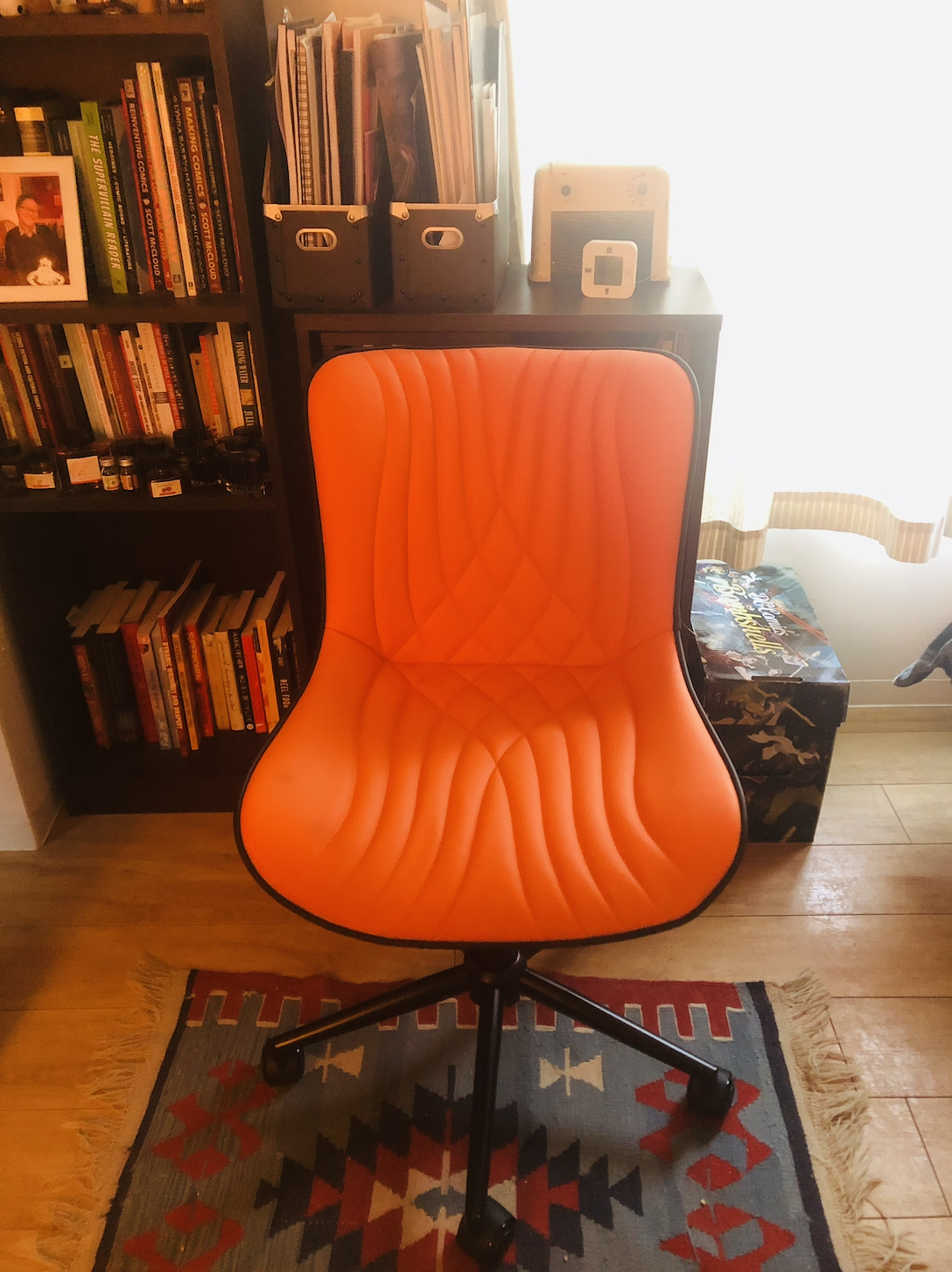
Swiveling around in it has also stirred my curiosity. making me think more about chairs in science fiction films—how, whether it be Star Trek or Station Eleven, the chair is the object that carries the most weight when it comes to representing the future. It is always the chair, isn’t it?
Not the sleeping pods in Alien or Star Wars' holographic chess table—chairs carry both functional and symbolic value, drawing our gaze onscreen the way they might when we first enter a room.
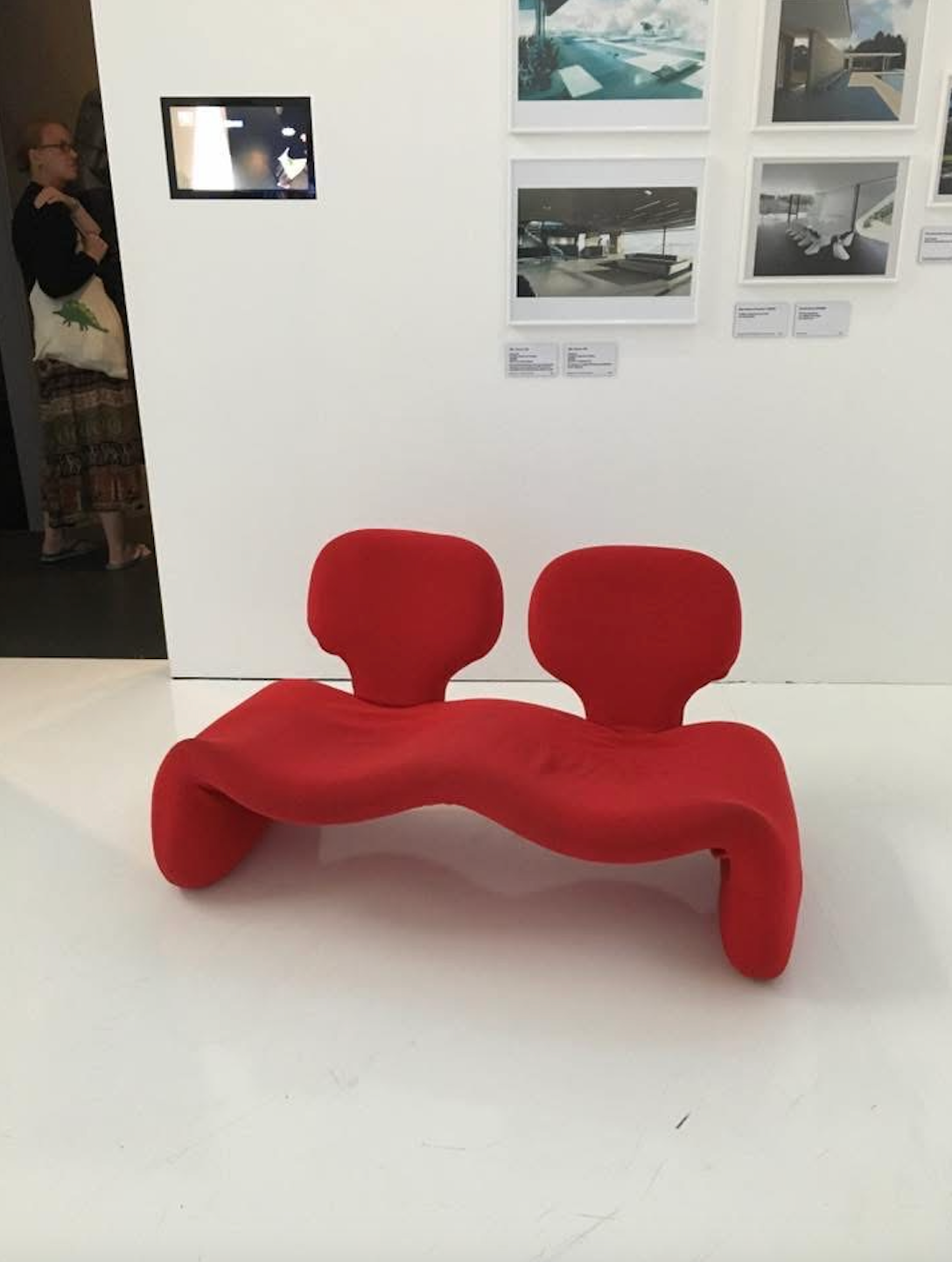
Ask almost anyone what they remember about the production design in 2001 and they’ll bypass the austere, ornate furnishings at the end of the film to mentally plop themselves down in a Djinn–Olivier Mourges’ undulating loungers in the lobby of the space Hilton. We remember those chairs as instantly as we recognize Pierre Paulin’s foamy, curvaceous Ribbon chair from Space: 1999 when it pops up in Blade Runner: 2049. When my partner and I attended a Science Fiction Film exhibition at the Deutsche Kinemathek nine years ago, the Djinn had half a room to itself–no explanation necessary.
It wouldn’t have made for the same dramatic effect if say Kubrick had his hominid slap a bone across two rocks and settle in to watch his pals fight it out with a rival clan, but the chair is just as crucial a tool as a weaponized femur, “a sitting-sleeping element….” writes Adaturk, “... simply raised from the ground has become an indicator of power, an element of collective memory, an aesthetic element, a therapeutic tool and a determinant of life.” Or, to misquote Jeremy Renner in Arrival, “the cornerstone of civilization isn’t language—it’s a chair.”
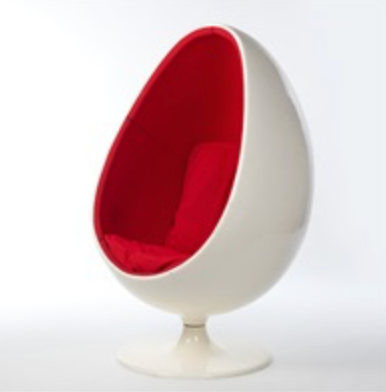
Speculative film and television have no shortage of these starlets, from Maurice Burke’s Tulip chair, which populates the bridge of the original Star Trek, to the cocoon-like leather enclosure where Harrison Ford broods in Blade Runner, and more notably Henrik Thor Larsen's Ovalia, the egg-shaped chair that traveled from the ‘60s to find its place in the poster for Men in Black II.
The designs are both functional and capricious, though the genre nudges us from reading them as whimsy, hinting that these strange contours serve some yet-to-be-revealed purpose. Perhaps the gravitational shifts in space travel will reshape our posture. Maybe the ergonomics are inclusive of alien body types, or there’s an unrevealed interdimensional component to their design. If we can learn to bend time and space, then it stands that our bodies and our chairs will have to bend with it. My body certainly is–albeit at a slower, less elegant pace–and my furniture sags under the added weight of middle age.
But as playful as these designs are outside of their science fictional settings, many did, in fact, anticipate a use for the present. Their enclosures block out peripheral vision, offering a respite from the near-constant barrage of screens clamoring for our attention. During my train commute, I often find myself wishing for a pair of horse blinders to obstruct the glare of the games or ads flashing from the phones of the riders next to me. My Suica pass for an egg!
But as playful as these designs are outside of their settings, many did, in fact, anticipate a use for the present. Their enclosures block out peripheral vision, offering a respite from the near-constant barrage of screens clamoring for our attention. During my train commute, I often find myself wishing for a pair of horse blinders to obstruct the glare of the games or ads flashing from the phones of the riders next to me. My Suica pass for an egg!
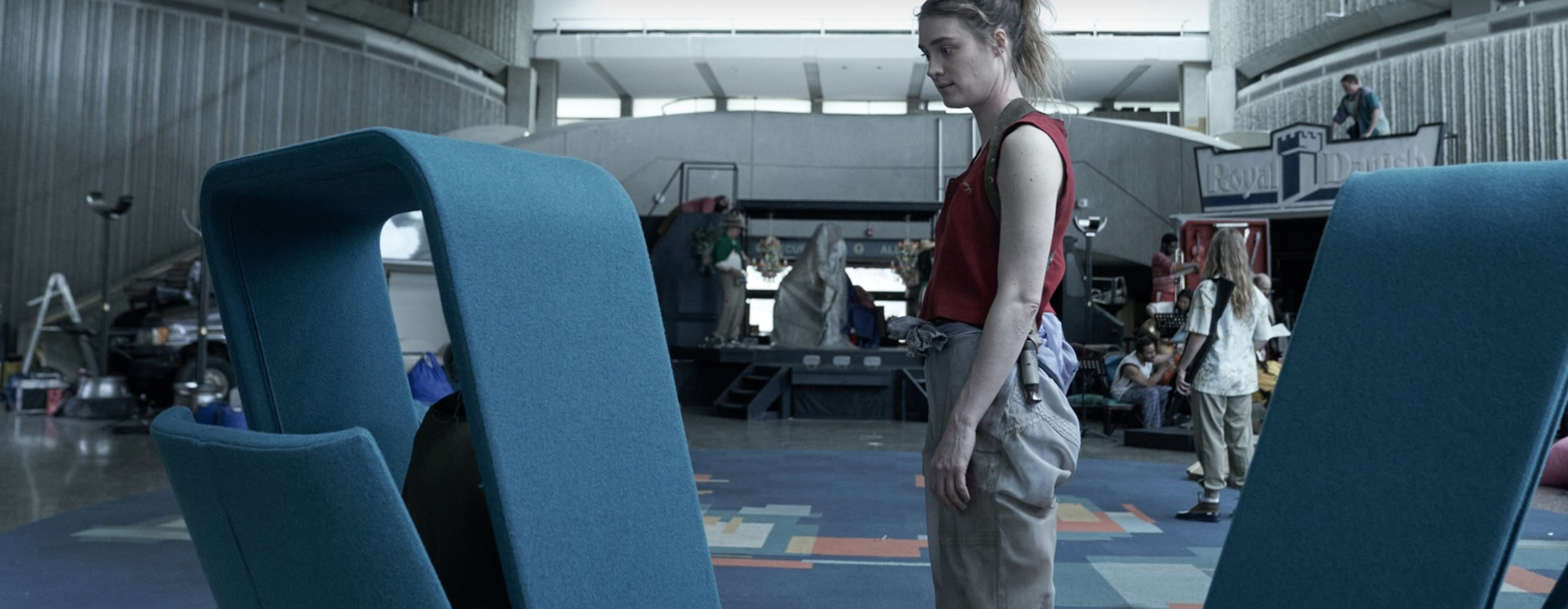
The walled-in quality also provides relief from a darker reality, promising privacy, or at least the illusion of it, in a world where we’re increasingly surveilled. It’s the tension between exposure and concealment, a hallmark of science fiction to which the chair serves as a microcosm and becomes a major component in world-building. There's a single shot in Station Eleven that never fails to awe me: a conversation between MacKenzie Davis and Caitlin Fitzgerald in the Severn Airport, a post-pandemic fortress played by the brutalist Ontario Science Center. We watch from behind as Davis and Fitzgerald huddle in a pair of space-age loungers much like Poole and Bowman in the pod, but unlike the ill-fated astronauts, their wraparound enclosures offer a feeling of comfort and intimacy.
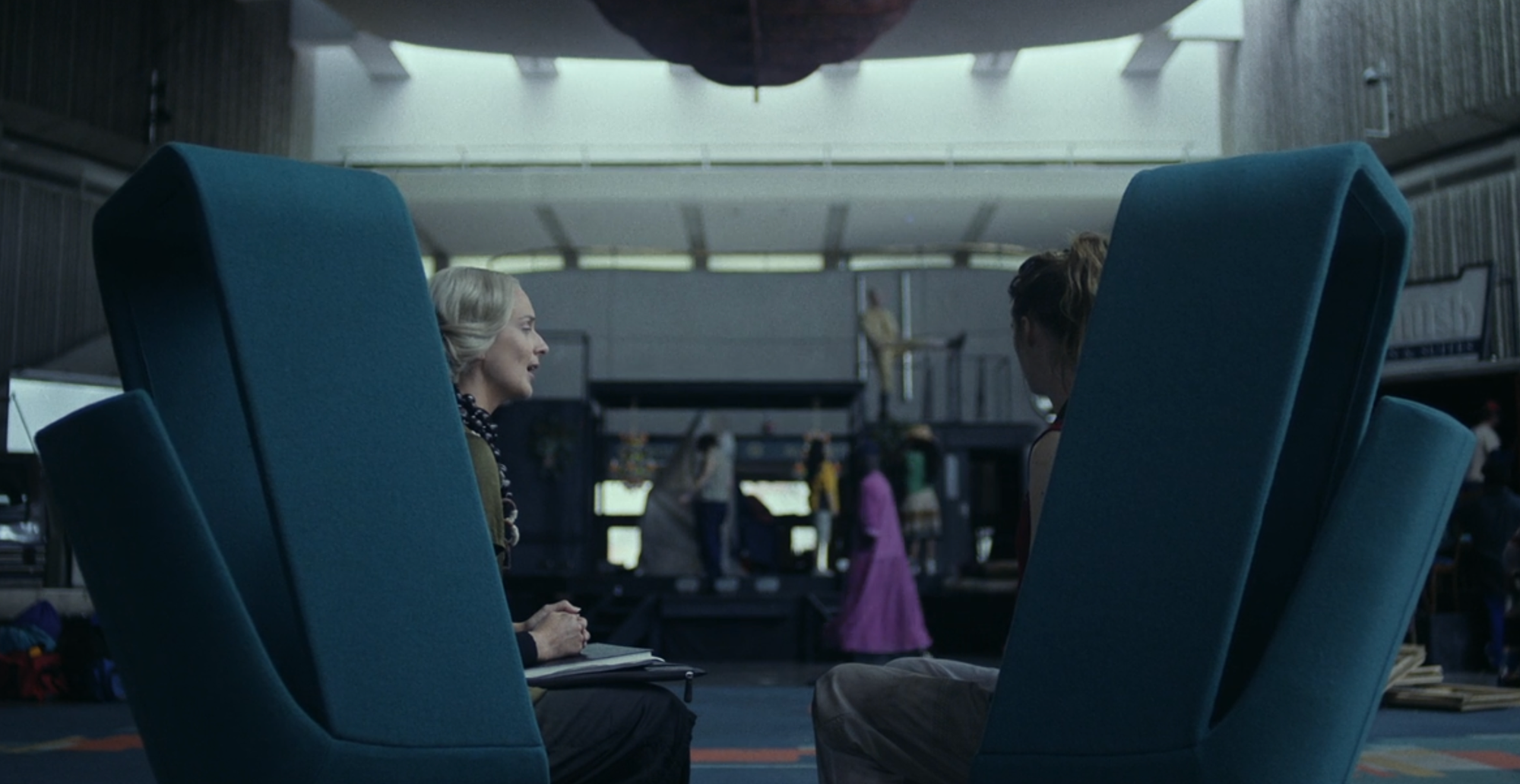
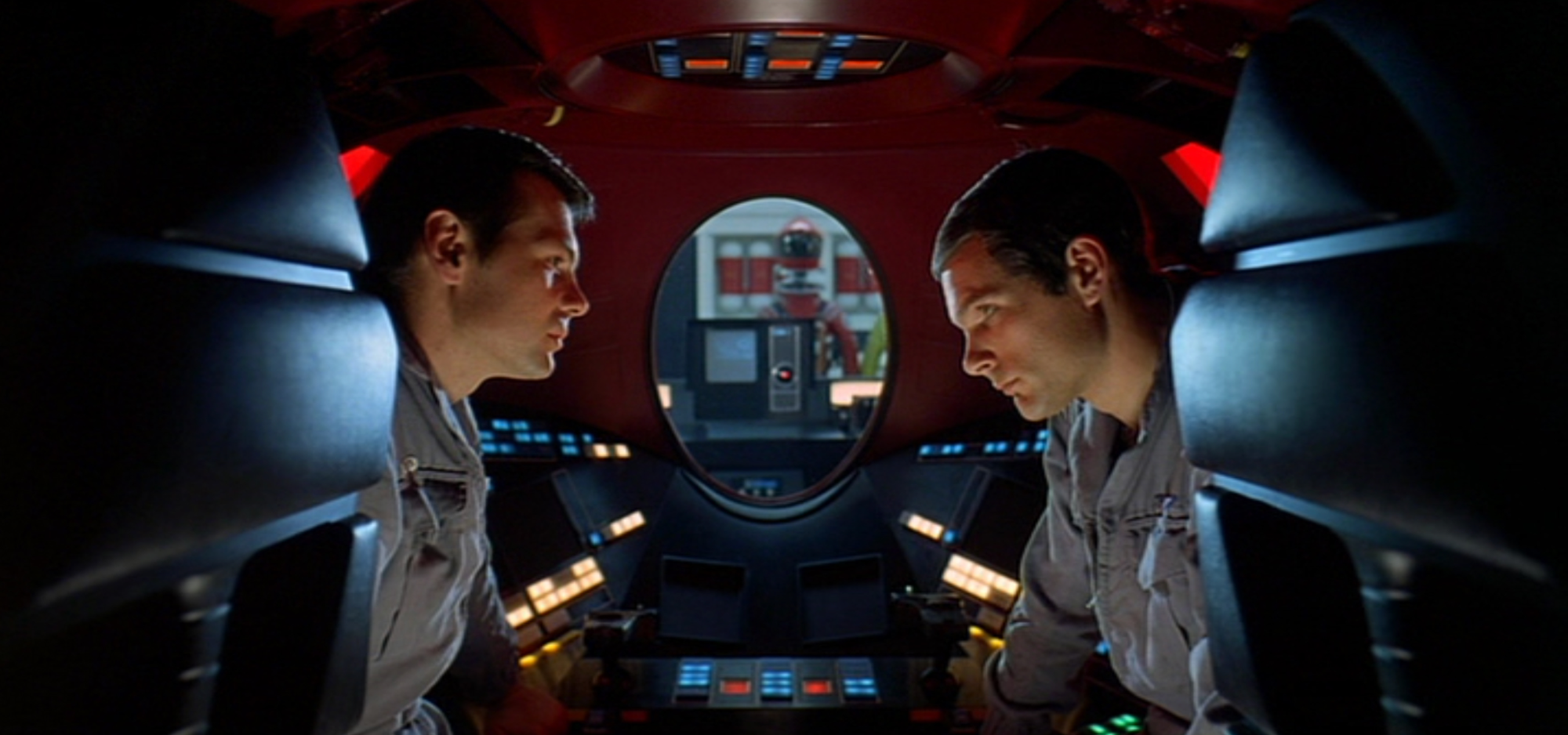
In this alternate future, the chairs are layered with meaning: artifacts of a pre-pandemic era, but before that, relics of an earlier time whose aesthetic tried to will itself into the future. Davis in her rough utilitarian clothing, her hair pulled into a messy bun, and Fitzgerald’s braids and a period costume (she is to play the role of Gertrude in a post-apocalyptic Hamlet) add to this sense of temporal overlap, like the flood-damaged fresco described in Ali Smith’s How To Be Both, whose restorers “found, underneath them, the underdrawing their artists had made for them, and sometimes the underdrawings were significantly different from their surfaces, which is something they’d never have discovered if there hadn’t been the damage in the first place.”
In Station Eleven, the chairs are free from the weight of the future. Like Hamlet, they can simply function as art.