Two Trees in a Galaxy Far, Far Away
I’ve been working my way through a backlog of craft books in the mornings. I’ll read for half an hour, sometimes half of that, taking notes before I start writing in earnest. It’s a good way to settle in, and there’s a bonus in making steady, albeit slow, progress on the TBR pile.
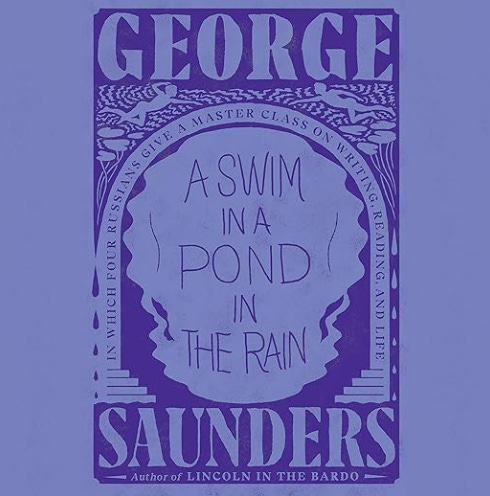
I’m currently on George Saunders’ A Swim in the Pond in the Rain: seven short stories by the Russian masters, with follow-up chapters in which he walks his creative writing students (and us) through their construction. It’s something I genuinely look forward to every morning. Books on writing can often be more about diagramming practice than speaking to the internal processes at play when you’re dangling over a blank page. But Saunders knuckles down on the doubt and the uncertainty, the parts of writing that may not be visibly productive, but are nevertheless signs that you’re pointed in the right direction.
In Chapter II, he takes us through Turgenev’s The Singers, a frustratingly digressive story about a singing contest in a backwoods pub that briefly rises to a moment of beauty before the night sinks back into squalor. Saunders unpacks how these seemingly needless digressions, along with a tacked-on epilogue in which the narrator awakens to the sound of two boys calling to each other in the woods (more on that later) set up a series of juxtapositions that evoke a sense of revelation in the reader.
What initially seems meandering or unimportant is, it turns out, the deliberate positioning of binaries. And the story is riddled with them: “the beautiful artistic moment” vs. “the ugly town" the contractor’s technique vs. Yashka’s raw emotion, “doleful crows vs. energetic sparrows.” A ravine, described in the opening, is a visual key, “divid[ing] the poor village in two” while unlocking other contrasts planted within the story, and that epilogue? A “miniature version of the story itself” as the boys, like the contestants in the pub, “sing” back and forth to each other in the darkness.
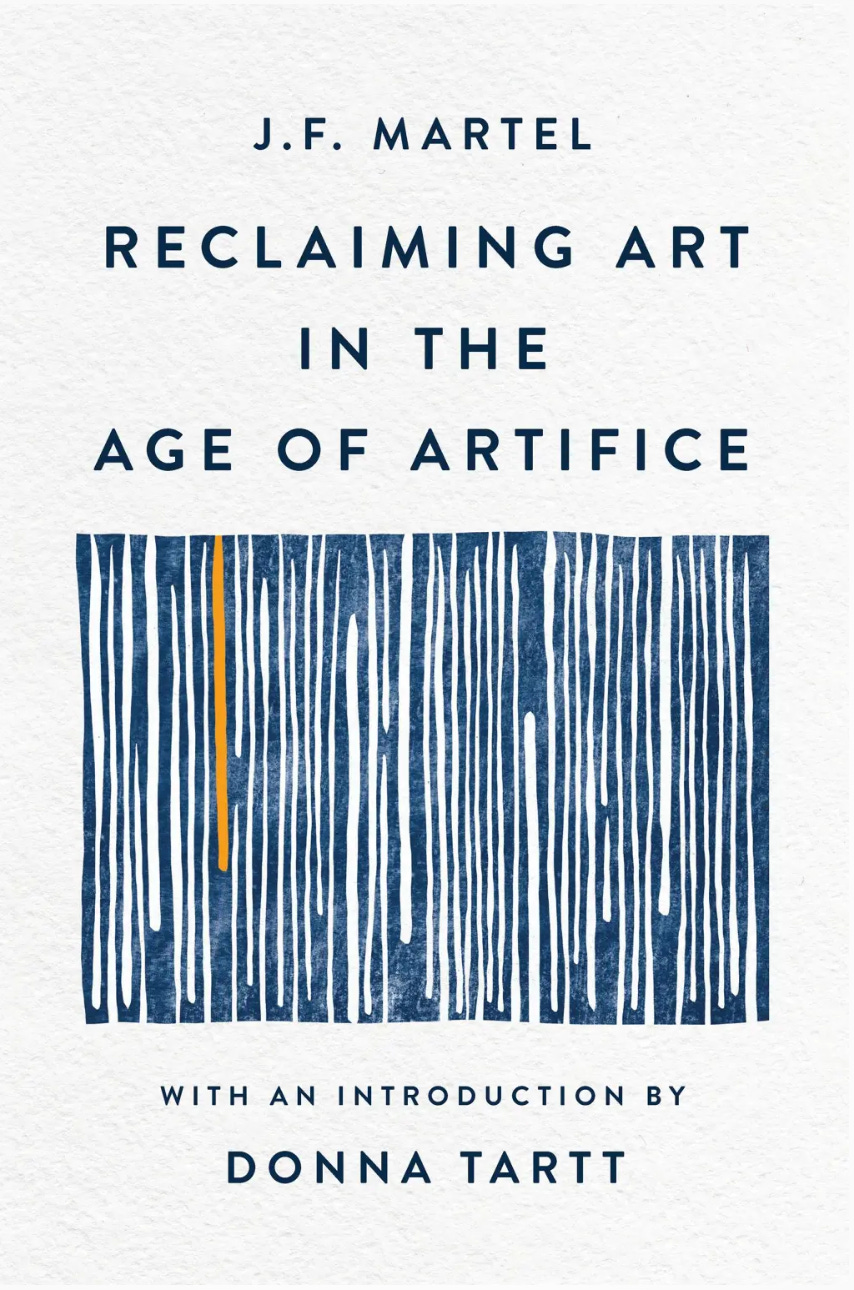
“Imagine a painting of a tree” he tells us, one a “tall, healthy oak…” and another gnarled and bent. It’s through this contrast, in an instant before we can pin down any explicit motifs, that a window opens through which we experience the ineffable. “We’re always explaining and articulating things. But we’re at our most intelligent in the moment just before we start to explain … What we turn to art for is precisely this moment, when we ‘know’ something (we feel it) but can’t articulate it because it’s too complex and multiple.” This description made me think of a passage in J.F. Martel’s wonderful Reclaiming Art in the Age of Artifice: “Caught in the throes of astonishment, we feel as though we were experiencing something that transcends personal opinion and relative viewpoints, and that does so with such force that it would seem absurd, after the fact, to entertain the possibility that it was all just in our heads.”
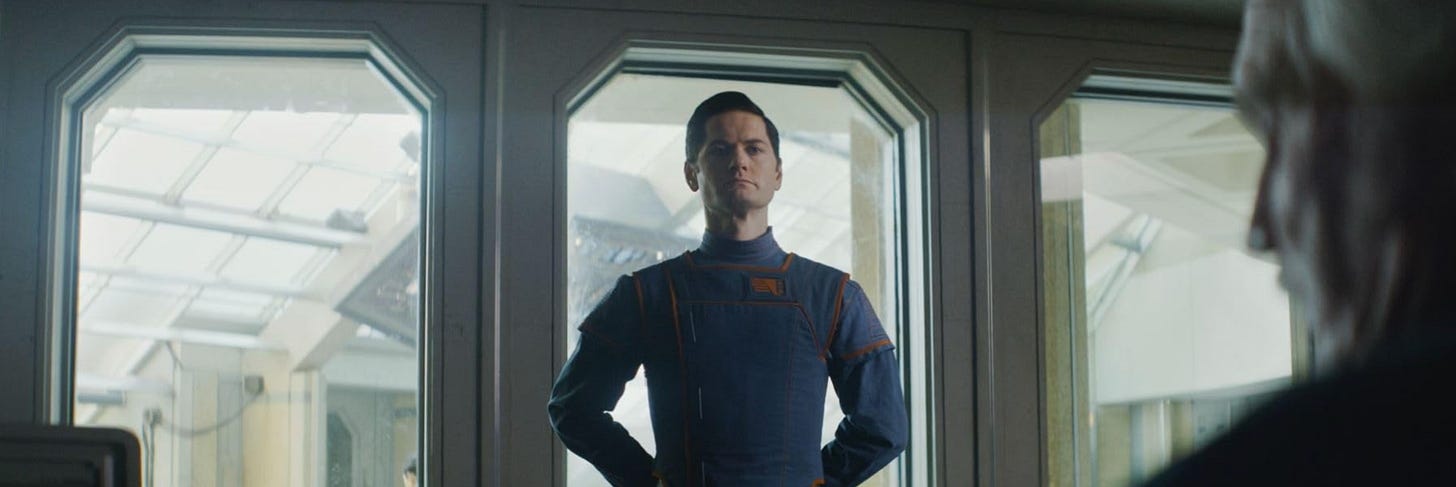
This tension between polarities is something I keep noticing in Andor, and how it uses echoes and oppositions to similar effect. Take the exchange between Syril Karn and Chief Inspector Hyne in the very first episode. Two Pre-Mor officers, corporate security thugs working under the Empire, have been found murdered. They were attempting to strong-arm Cassian, leaving him no choice but to kill in self-defense. Syril, a browbeaten, ambitious cog in the Pre-Mor machine, seeks justice, but Hyne, the quintessential middle-manager would rather cover his ass, telling Syril to bury the investigation.
“But they were murdered,” Syril says.
“No,” Hyne cuts him off. “They were killed in a fight.” He then launches into a contradictory progression that would make Polonius blush. “They were in a brothel, which we are not supposed to have. The expensive one, which they shouldn’t be able to afford. Drinking revnog, which we are not supposed to allow…” He is on his way to an Imperial Command review, where he’ll be asked about the Ferrix crime rates, and “the goal of that speech, should you ever be asked to deliver it,” he says, “is brevity.”
As with Turgenev’s epilogue recalling the contest in the pub, this construction of a cover story echoes a scene before it. Minutes earlier, we see Cassian skulking through the Ferrix streets. Desperate for an alibi, he approaches his friend Brasso, asking where he was the night before. Brasso replies that he was tired and went to bed.
“No,” Cassian says. “You came by for me and I wasn’t there, so you started home, but then you saw me at the hotel bridge. We decided we were thirsty; you wanted to go to Cavos, but I said no-it’s too crowded, and I owe money there … Then you remembered you still had half a bottle of nog stashed at home, so we went there and drank ourselves to sleep...”
Unlike Syril, however, Brasso leans in, embroidering his friend’s alibi with one explaining the visible bruise on Cassian’s face. “You insulted my choice of beverage. As host and provider, I was offended. You failed to gauge the depth of my irritation. You rose to make your point more vocally. I was helping you back into your chair when you fell.”
Look closer at these scenes, and even more dualities begin to emerge. The “Nos” shifting their dynamics are like the ravine in Turgenev’s story. Framing vs. alibi, Syril’s shock and then contempt for Hyne vs. the banter and trust between Cassian and Brasso; the desire to protect one’s position vs. the need to protect one’s life, and then there’s Hyne’s beautiful litany of contradictions. I could go on—indeed, I have—but I’d rather you watch the series. In short, these poles are necessary. They’re what elevates Andor into not just a compelling Star Wars outing, but yeah, I’ll say it—great art.
That tension generates an interference pattern through which we might occasionally experience transcendence, which isn’t to say that art has to bend itself toward binaries or stay within the poles others might fix for it. But erasing or declaring them out of existence can also lead to a flattening, a deprivation of those moments in which, Saunders argues, we’re at “our most intelligent…”
Speaking of that epilogue in The Singers, he observes, “There’s a correspondence, but it’s not neat.”
Indeed, it shouldn’t have to be.